Entrepreneurship didn’t arrive later in life for me. It started long before I understood what the word meant.
As a child, I didn’t just play games – I built companies. By the age of twelve, I had already “run” a magazine, a restaurant, and a hotel. I invented brands, designed logos, imagined customers, and created entire business worlds in my bedroom. While other children were collecting toys, I was collecting ideas.
That early fascination with building businesses never really left. It shaped how I saw problems and opportunities long before I entered the professional world.
When I went to university to study Graphic Design at Lincoln University, later continuing my studies in Marketing at the Cambridge Professional Academy, I already knew what I wanted.
I remember the week before leaving for university very clearly. I went for a beer with my dad and he asked what I imagine many fathers ask at that moment: “Son, what’s your goal in life? What do you hope to do after university?”
My answer was simple – to run my own business. At the time, the plan was to start a design agency, but the deeper ambition was always to build something of my own.
Building the Foundation
During university, I began attending innovation and enterprise events, spending time around students who were launching start-ups. Many of them had strong ideas but struggled to explain them clearly to potential customers, partners, or investors.
As a Graphic Design student, I started helping them with design, branding, and communication. What began as small freelance work quickly grew into the foundation of my own brand consultancy, and by the time I graduated, I already had a client base.
Over the following years, I continued developing that consultancy while also working within agencies on national brands. This experience proved invaluable. It allowed me to understand how established organisations communicate value and build credibility, while also seeing first-hand the challenges early-stage companies face when trying to do the same with limited resources.
That combination of perspectives eventually led me closer to the world of start-up investment.
Discovering the Communication Gap in Fundraising
My introduction to equity investment came through business associates who were also angel investors. Being around those conversations allowed me to observe the fundraising process from the investor’s side of the table.
Very quickly, one issue became impossible to ignore.
Many founders were presenting genuinely powerful ideas – businesses that had the potential to transform their industries. Technically and strategically, the opportunities were often impressive. However, when it came to communicating those ideas to investors, many founders struggled to articulate the opportunity clearly.
Watching promising ventures lose momentum because of poor communication was frustrating. In many cases the business itself was not the problem. The message was.
I realised that great ideas were failing not because they lacked potential, but because founders did not yet have the tools to communicate that potential convincingly to investors.
A Deep Dive into Investment Readiness
That realisation led me to study the investment process in far greater depth. Over several years, I immersed myself in the mechanics of fundraising, analysing how investors evaluate opportunities and what signals make a business appear credible.
This involved extensive conversations with founders and investors, analysing funding patterns, studying investor objections, and examining how successful start-ups structure their narratives when seeking capital.
What emerged from this research was a structured, repeatable system for helping founders present their businesses in a way that aligns with investor thinking. The goal was not simply to improve presentations, but to help founders design businesses that are fundamentally easier for investors to understand and evaluate.
Writing Investable Entrepreneur
After years of advising founders and repeatedly answering the same questions, it became clear that these insights needed to be captured in a form that founders could access more widely.
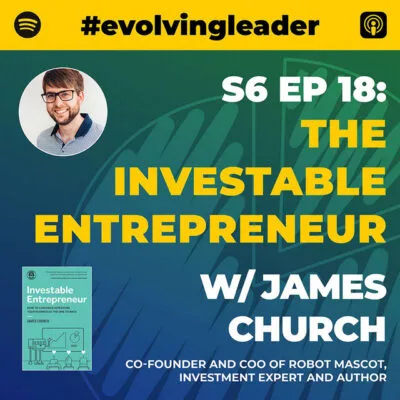
That led to the creation of my book Investable Entrepreneur: How to convince investors your business is the one to back.
The book was designed as a practical guide to help founders understand what investors actually look for, how to structure their business narrative, and how to demonstrate credibility when seeking capital. It formalised the methodology I had been developing through years of consulting and advisory work.
When the book launched, it became an Amazon Best Seller and briefly outsold titles by Elon Musk, Jeff Bezos, and Richard Branson. More importantly, founders began using the framework to reshape how they approached fundraising.
Businesses applying the methodology from the book have since raised more than £200 million in early-stage funding.
Supporting Founders and Future Entrepreneurs
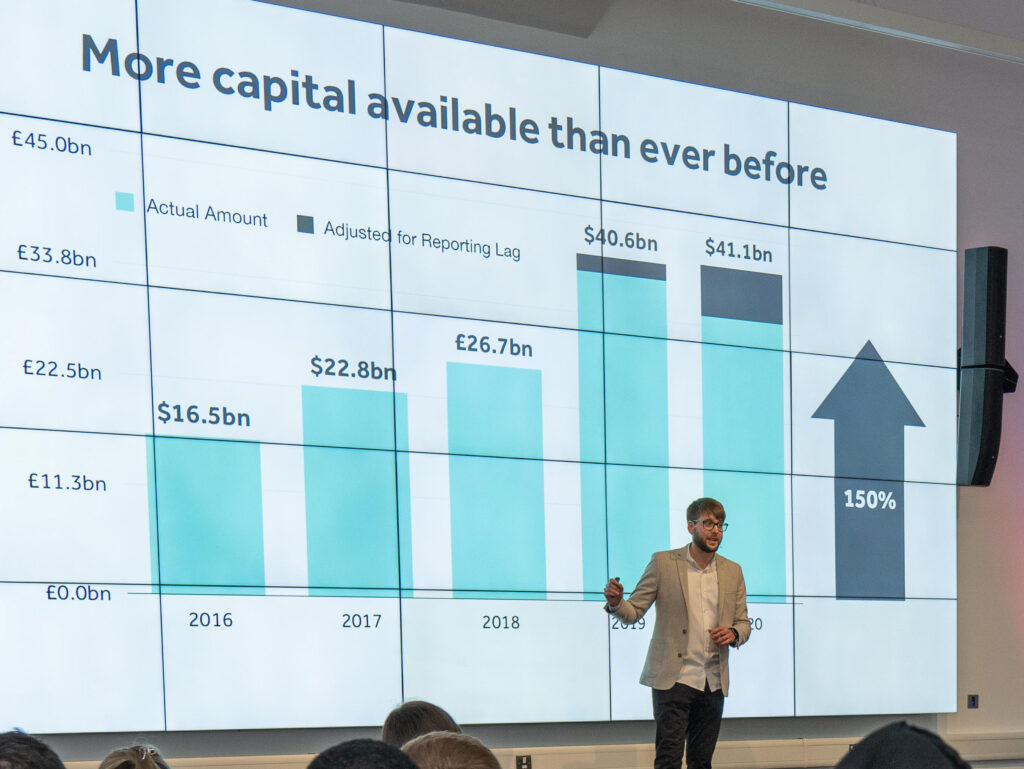
Alongside my advisory work, I have run mentoring sessions at national and international incubators and also lectured MSc Entrepreneurship students on raising equity investment and pitching for investment.
Teaching founders at an early stage of their journey reinforces something I have seen repeatedly across the start-up ecosystem: many entrepreneurs struggle not because their ideas are weak, but because the investment case behind those ideas has not been clearly articulated.
Seed capital is often the turning point for high-potential ventures, and understanding how investors evaluate opportunities can dramatically improve a founder’s chances of securing that funding.
Today my work focuses on helping founders build businesses that investors recognise as credible, scalable, and worth backing. Through start-up consulting, fundraising advisory, and business strategy support, my aim remains the same: ensuring that great ideas do not fail because of poor communication.