
Founders often tell me they’re reluctant to talk publicly about what they’re building. They’re worried someone will take the idea and move faster. They want investors to sign NDAs before they share a deck.
I understand that instinct. But I’ve learned something very different through experience. If your idea is worth building, it’s worth sharing. And if it’s worth copying, you’re probably already on the right path.
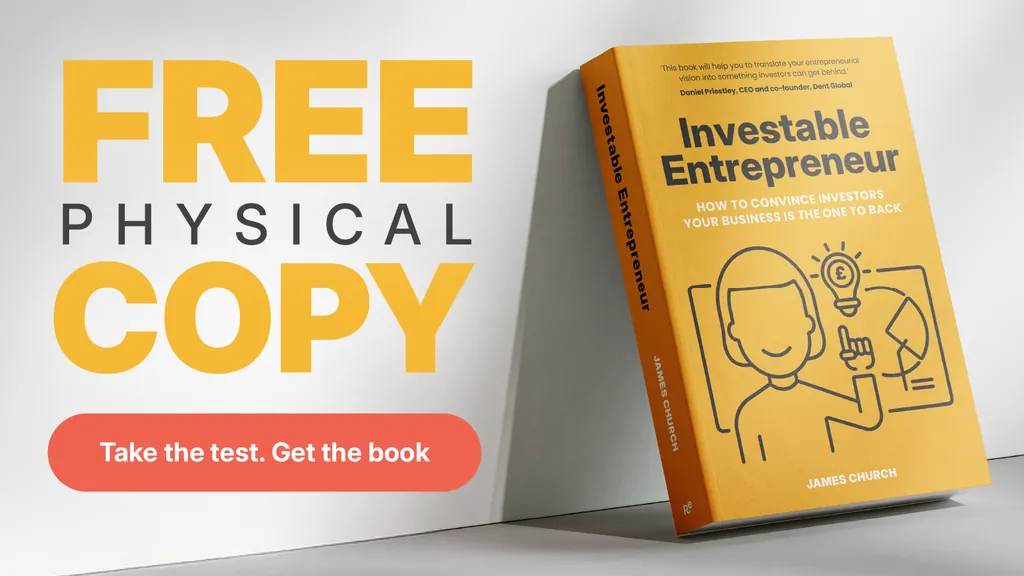
I know that because my book Investable Entrepreneur was plagiarised.
Someone copied it word for word and republished it under a slightly different title. I discovered it months after it appeared online. My publishers removed it quickly, but during that time it had been available on Amazon alongside the original.
Despite this, it sold zero copies, whereas mine sold thousands.
That contrast explains something important about how real businesses grow.

The secrecy instinct holds founders back
Many early-stage founders assume their biggest risk is being copied. So they stay quiet, delaying conversations and actively avoiding shouting about their idea.
But the reality is that this caution slows them down more than competition ever could.
- Investors don’t back hidden businesses
- Customers don’t adopt invisible products
- Markets don’t respond to silence
The founders who move fastest are usually the ones who explain what they’re doing early and often. Those who can take their audience on their journey. Not because they’re careless, but because they understand where real advantage comes from.
They’ve realised that ideas alone are rarely valuable, and that what’s valuable is the execution.
How my experience with plagiarism changed how I think about visibility
When I first discovered the copied version of Investable Entrepreneur, I should have been furious.
I had spent six months writing that book between 8pm and 2am while building a business and raising a young family. It was a serious commitment. The book distilled years of experience across branding, marketing and equity investment into a practical guide for founders raising capital.
But instead of feeling threatened, I bought a copy of the plagiarised version myself. It’s now the only printed copy in existence.
I keep it as a reminder that ideas with real impact attract attention. And attention is not something founders should be afraid of, it’s something they must learn to use.
The reason the copied version failed while the original succeeded wasn’t luck. It came down to four advantages that serious founders always have over imitators.
1. Your insight cannot be replicated
Investable Entrepreneur exists because of a very specific combination of experience.
Years spent working in branding and marketing shaped how I think about positioning. Years spent working with founders raising equity shaped how I understand investor behaviour. Bringing those together created a perspective that didn’t exist elsewhere in the market.
Sure, someone could copy the words in the book, but they couldn’t copy the insight behind them.
The same applies to founders building businesses. The deeper your understanding of the problem, the harder it becomes for someone else to reproduce your approach in a meaningful way.
Surface-level imitation looks convincing from a distance, but close up, it rarely works. Investors will recognise this difference very quickly.
2. Authenticity shapes how the audience responds
My book reflected the problems I repeatedly saw founders facing when they tried to raise investment. It offered solutions based on what I’d seen working in practice, not in theory.
That authenticity matters more than most founders realise. Your audience responds differently when ideas are grounded in lived experience rather than opportunism. Everyone, from customers and investors to suppliers and partners, notices it.
People attempting to copy an idea usually approach it from the outside. They’re reacting to perceived success rather than solving a problem they deeply understand. That difference affects everything from messaging to delivery.
It’s difficult to fake conviction when it isn’t there.
3. Systems determine whether ideas spread
Even the best ideas don’t travel on their own, they need distribution. Investable Entrepreneur reached founders because I already had systems in place to connect with them. Talks, podcasts, social content and targeted promotion created a route between the book and the people who needed it.
Without those systems, the copied version had no way to reach its audience, and so failed to sell a single copy (other than to me!).
This is where many founders misunderstand competition. They assume the risk lies in someone copying what they are building. In reality, the greater challenge is building the distribution that allows an idea to reach the market consistently.
4. Passion sustains execution over time
The book wasn’t written to create a short-term opportunity. It was written because I saw a persistent problem with how founders approach fundraising and wanted to improve their chances of success. And that motivation shaped the entire project.
It also explains why the copied version failed.
Copying an idea is easy. Sustaining the work required to make it useful is not. When execution is driven by a long-term vision rather than short-term gain, it creates a resilience that imitation can’t match.
Founders who care deeply about the problems they’re solving will almost always outlast founders chasing momentum.
Sharing ideas strengthens your position rather than weakening it
One of the most common concerns I hear from founders is that people being aware of their idea increases risk. But the reality is that increased visibility leads to increased opportunity.
Sharing your thinking helps customers understand what you’re building. It helps investors understand how you think and the journey you’re on. It helps partners understand where you fit in their ecosystem. It also accelerates feedback, creating a loop that will improve the execution.
And improved execution ultimately creates distance between you and anyone trying to copy you. They’re always going to be playing catch-up.
The founders who succeed are the ones who step forward
The most successful founders don’t succeed by protecting their ideas. They succeed by building in the market. Doing so develops valuable insight, builds solid systems, improves communication, and creates a feedback loop for accelerated growth.
If someone copies your idea, it doesn’t mean you’re exposed. It usually means you’ve got something worth pursuing.