Tag: startup funding UK

  • SEIS Advance Assurance: How to Apply and Why Investors Ask for It

    SEIS Advance Assurance: How to Apply and Why Investors Ask for It

    SEIS Advance Assurance: How to Apply and Why Investors Ask for It

    James Church

    WRITTEN BY

    James Church

    Author, Investable Entrepreneur

    James is an award-winning business advisor and best-selling author. His clients have raised over £250m in early-stage funding. 

    You have a strong pitch and a few interested angels. Then one asks: ‘Do you have SEIS advance assurance?’ If the answer is no, many will wait, and some will walk away. This guide explains what SEIS advance assurance is, how to apply, what HMRC needs from you and, just as important, why investors ask for it before they commit.

    What is SEIS advance assurance?

    SEIS advance assurance is an opinion from HMRC, given before you issue shares, that your company and your planned share issue are likely to qualify for the Seed Enterprise Investment Scheme. It is free and optional, and you apply through HMRC’s advance assurance service on GOV.UK.

    It is not a guarantee. HMRC bases its opinion on the information you send. If your business, share rights or plans change before the shares are issued, the assurance may no longer apply. Investors only receive the tax relief later, once the company files its SEIS1 compliance statement and issues SEIS3 certificates.

    If you are new to the scheme itself, start with our guide, SEIS Explained: What It Means for Your Startup Raise, which covers the limits and investor reliefs.

    Why investors ask for advance assurance

    Advance assurance is not a legal requirement, so why do so many angels insist on it?

    • It protects their tax relief. SEIS gives investors 50% income tax relief, plus capital gains and loss relief. Advance assurance tells them HMRC has looked at the company and sees no obvious problem.
    • It saves them due diligence time. An angel reviewing ten deals a month cannot check every company’s trade, share structure and history against the SEIS rules. An HMRC opinion does part of that work for them.
    • It shows the founder is organised. The business plan, forecasts and clean records HMRC needs are the same things investors expect.
    • Some investors cannot invest without it. Many SEIS funds, syndicates and crowdfunding platforms make advance assurance a condition of investment.

    Treat advance assurance as part of your fundraising preparation, not a tax form you deal with after the round.

    Who can apply?

    Your company must meet the SEIS conditions when the shares are issued. In summary, it must:

    • have been trading for no more than three years
    • have gross assets of no more than £350,000
    • have fewer than 25 full-time equivalent employees
    • raise no more than £250,000 under SEIS in total, including other small state aid in the past three years
    • have a permanent establishment in the UK and not be controlled by another company
    • carry on a qualifying trade, not an excluded activity such as property development or financial services
    • not have received EIS or VCT investment before.

    If you are close to any of these limits, take advice before you apply.

    What HMRC needs in your application

    A complete application is the fastest route to approval. Prepare these before you start:

    1. Business plan. What you sell, who buys it, your market, your team and how you will use the money. A three-year view is standard.
    2. Financial forecasts. Profit and loss, cash flow and, ideally, a balance sheet, covering at least the next three years.
    3. Latest accounts, if your company has filed any.
    4. Articles of association, including any changes planned for the round. Check that the shares carry no preferential rights to assets on a winding up, which would break the rules.
    5. Draft shareholder or subscription agreement, if you have one.
    6. Pitch deck or information memorandum that you will send to investors.
    7. Company details, including your registration number, Unique Taxpayer Reference and any previous state aid.
    8. At least one named potential investor. Unless you have raised under a venture capital scheme before, HMRC expects the name and address of at least one investor and an idea of how much they plan to invest. HMRC does not accept speculative applications from companies with no live fundraising.

    This creates an obvious problem: investors often want advance assurance before they commit. The answer is to ask one or two warm investors to be named as interested parties. Being named is not a binding promise.

    Free SEIS advance assurance application kit

    Answer a few questions and get a ready-to-check pack for your HMRC application, free.

    How to apply for SEIS advance assurance

    1. Confirm you qualify. Check each SEIS condition against your company’s current position.
    2. Gather your documents. Use the list above, and make sure your business plan clearly explains your trade. Vague trade descriptions are a common cause of delay.
    3. Line up a named investor. Get their details and an indication of the amount.
    4. Complete the online form. Apply through the GOV.UK service using your Government Gateway account, and upload your documents in one submission.
    5. Answer HMRC’s questions quickly. If HMRC asks for more information, reply promptly and precisely.

    HMRC aims to respond within about 15 working days, though complex cases or incomplete applications can take several weeks longer. Build that time into your fundraising plan. Applying a month or two before you start formal investor meetings is a sensible target.

    What happens after you receive advance assurance

    Once HMRC confirms its opinion, share the letter with serious prospects. Then:

    • Issue the shares in the right order. If you are combining SEIS and EIS, issue the SEIS shares at least a day before the EIS shares.
    • Stick to the plan you described. Major changes to your share structure or business may mean you need to contact HMRC again.
    • File the SEIS1 on time. After you have traded for four months or spent 70% of the money raised, submit the compliance statement. HMRC then authorises you to issue SEIS3 certificates.

    If your term sheet includes investor preferences, check them before signing. Our guide, What Is a Term Sheet? A Guide for UK Founders, explains why a standard liquidation preference can clash with SEIS.

    Common advance assurance mistakes

    • Applying too late. Waiting until investors ask for it can stall your round by several weeks.
    • Describing the trade vaguely. HMRC needs to understand exactly what the company does and how it earns money.
    • Forgetting the named investor. Without one, a first-time application will usually be rejected.
    • Changing the share structure afterwards. New share classes or rights can undo the basis of the assurance.

    Frequently asked questions

    Is SEIS advance assurance mandatory?

    No. But most SEIS investors expect it, so in practice it is hard to raise an SEIS round without it.

    How long does SEIS advance assurance take?

    HMRC aims for around 15 working days. Allow longer if your case is complex or HMRC has follow-up questions.

    Does it cost anything to apply?

    No. The HMRC application is free, although you may pay an adviser to prepare it.

    Can I apply for SEIS and EIS advance assurance together?

    Yes. One application can cover both schemes if you plan to use both.

    Final thoughts

    Advance assurance is one of the easiest ways to make a UK pre-seed round more attractive. It reduces investor risk, shortens due diligence and shows you have done the groundwork. The documents HMRC asks for are the same ones that make a strong pitch.

    If you are getting ready to raise, our pre-seed pitch deck service helps you build a deck and story that work for HMRC and investors alike. You can also read our pre-seed pitch deck funding guide and learn how to find investors for your startup.

    Want help getting investment-ready?
    Let’s talk about how I can help you raise.

    About the Author

    James Church is an award-winning UK startup advisor, fundraising strategist, and author of Investable Entrepreneur. He has helped founders raise more than £250 million in investment by improving investor readiness, refining fundraising strategies, and developing compelling pitch decks.

    Through Investable Entrepreneur, James works with entrepreneurs to create investor presentations that communicate value clearly, strengthen fundraising confidence, and improve investment outcomes through practical, real-world expertise.

  • The Stages of Startup Funding: Pre-Seed to Series A

    The Stages of Startup Funding: Pre-Seed to Series A

    The Stages of Startup Funding: Pre-Seed to Series A

    James Church

    WRITTEN BY

    James Church

    Author, Investable Entrepreneur

    James is an award-winning business advisor and best-selling author. His clients have raised over £250m in early-stage funding. 

    Startup funding is rarely one big cheque. Most companies raise in stages, each with different investors, amounts and expectations. Knowing which stage you are at, and what investors want to see before the next one, helps you raise the right amount at the right time.

    This guide walks through the startup funding phases from pre-seed to Series A, with a UK focus.

    Why startups raise in stages

    Each funding round should take the company to a milestone that makes it more valuable and less risky. Investors at the next stage then pay a higher price for that lower risk. Raising too much too early means giving away more equity than you need to. Raising too little means running out of money before you reach the next milestone.

    The British Business Bank’s guide to equity funding stages describes the same pattern: each stage funds a specific step, from building a first product to scaling a proven business.

    The stages of startup funding at a glance

    StageWhat you are provingTypical UK investors
    BootstrappingThat you are committedFounders, savings, early revenue
    Pre-seedThat the problem and solution are realFriends and family, angels, accelerators
    SeedThat customers want the productAngels, syndicates, seed funds, crowdfunding
    Series AThat the business can grow repeatablyVenture capital firms
    Series B and beyondThat growth can scale furtherLarger VC, growth and private equity funds

    Round sizes vary widely by sector and region, so treat any figures as a guide rather than a rule.

    Stage 1: Bootstrapping

    Most startups begin with the founders’ own money and time. Bootstrapping lets you test an idea without giving away equity, and it shows investors you have taken risk yourself. Some businesses never need to raise at all if early revenue covers growth.

    The aim at this stage is to learn as much as possible, as cheaply as possible. That usually means talking to potential customers and building a simple version of the product. Our guide to building a minimum viable product covers how to do this well.

    Stage 2: Pre-seed funding

    Pre-seed is the first outside money. It usually funds market research, a minimum viable product and the first hires. Investors are typically friends and family, angel investors and accelerators.

    In the UK, many pre-seed rounds use the Seed Enterprise Investment Scheme, which gives investors 50% income tax relief on up to £200,000 a year. A company can raise up to £250,000 under SEIS in total, which makes it a natural fit for this stage. Read SEIS Explained: What It Means for Your Startup Raise to see how it works.

    What investors look for: a clear problem, a credible team, early evidence of demand and a plan for what the money will achieve. Ideas alone rarely raise money now, as we explain in Pre-Seed in 2026: Why Ideas Don’t Raise Investment Anymore.

    Stage 3: Seed funding

    Seed funding turns a working product into a real business. It pays for product development, early sales and marketing, and key hires. Investors include angels, angel syndicates, seed stage venture capital funds and equity crowdfunding platforms.

    Seed rounds in the UK commonly run from a few hundred thousand pounds to a few million. According to Mercia Ventures and Beauhurst’s review of 2025 UK equity deals, the average seed-stage deal was just over £1 million, and the median pre-money valuation of seed-stage companies was about £2 million. Many seed rounds combine SEIS money with the Enterprise Investment Scheme (EIS) for amounts above the SEIS limit.

    What investors look for: early traction such as paying customers, growing usage, pilots or letters of intent, plus a clear route to product-market fit. This is often the first round with a formal term sheet, so it is worth understanding the terms. See What Is a Term Sheet? A Guide for UK Founders.

    Stage 4: Series A

    Series A is usually the first round led by an institutional venture capital firm. By this point, the company should have product-market fit and a repeatable way to win customers. The money funds scaling: building out sales teams, expanding into new markets and strengthening the product.

    Series A rounds are significantly larger than seed rounds, often several million pounds. The same Beauhurst data puts the median pre-money valuation of venture-stage companies at about £6.5 million, more than three times the seed figure.

    What investors look for: strong revenue growth, healthy unit economics (what it costs to win a customer against what that customer is worth), a large market and a team that can scale. VCs will also look closely at your cap table and governance.

    Stage 5: Series B and beyond

    Later rounds fund rapid expansion, acquisitions or international growth. Series B and C investors are typically larger VC firms, growth equity funds and sometimes corporate investors. Some companies then go on to a sale or a stock market listing (an IPO). Investors here judge the business mainly on revenue, margins and retention.

    How to tell which stage you are at

    The label matters less than the evidence you can show. Ask yourself:

    1. Do I have a product? If not, you are at bootstrapping or pre-seed.
    2. Do customers use it and pay for it? If a few do, you are moving towards seed.
    3. Can I predict how new customers arrive and what they are worth? If so, you may be ready for Series A.
    4. What will this round help me prove? Your answer should match the next stage’s expectations.

    Our article on whether your startup is ready to raise investment goes into more detail.

    Common mistakes when moving between funding stages

    • Pitching to the wrong investors. A Series A fund will rarely back a pre-revenue idea, and a friends-and-family round won’t fund a national roll-out.
    • Raising without a milestone. Every round should have a clear goal that makes the next round easier.
    • Giving away too much equity early. Heavy dilution at pre-seed can make the cap table unattractive to later investors.
    • Leaving too little runway. Most rounds take three to six months to close, so start before money gets tight. We cover timing in There Are Only Two Smart Times to Raise Investment.
    • Ignoring SEIS and EIS. Losing eligibility through the wrong share structure or funding order can cost you investors.

    Frequently asked questions

    What are the main stages of startup funding?

    Bootstrapping, pre-seed, seed, Series A, then Series B and later rounds.

    What is the difference between pre-seed and seed?

    Pre-seed funds the first product and proof of demand. Seed funds early growth once customers are using the product.

    How much do UK startups raise at seed?

    It varies widely. Average UK seed-stage deals were just over £1 million in 2025, but many rounds are smaller.

    Do I have to go through every stage?

    No. Some companies skip stages, raise only once or never raise at all.

    Final thoughts

    Each funding stage is a step towards a more valuable, less risky business. Knowing where you sit, and what the next investors need, helps you raise the right amount on fair terms.

    If you are planning your next round, our fundraising services help founders prepare a pitch, a plan and an investor approach that matches their stage. To get started, read what an angel investor is and how to find investors for your startup.

    Want help getting investment-ready?
    Let’s talk about how I can help you raise.

    About the Author

    James Church is an award-winning UK startup advisor, fundraising strategist, and author of Investable Entrepreneur. He has helped founders raise more than £250 million in investment by improving investor readiness, refining fundraising strategies, and developing compelling pitch decks.

    Through Investable Entrepreneur, James works with entrepreneurs to create investor presentations that communicate value clearly, strengthen fundraising confidence, and improve investment outcomes through practical, real-world expertise.

  • You’re pitching the wrong investors. Here’s how to raise in 2027

    You’re pitching the wrong investors. Here’s how to raise in 2027

    You’re pitching the wrong investors. Here’s how to raise in 2027

    James Church

    WRITTEN BY

    James Church

    Author, Investable Entrepreneur

    James is an award-winning business advisor and best-selling author. His clients have raised over £250m in early-stage funding. 

    Nearly every founder I speak to has the same (wrong) expectation about how they’re going to close their pre-seed or seed round.

    Most founders think they’re going to raise from a handful of investors, putting in £150k to £250k each.

    And I can understand the attraction – a smaller cap table, fewer conversations and fewer investors to manage.

    But this isn’t how you’ll close your round in 2027.

    The people who can comfortably write cheques for 50% or more of the round are a much smaller group than you realise.

    Let’s take someone investing £100k into a startup.

    To write this kind of cheque, they’ll be a serious investor. And so they’ll understand that startup investing is a portfolio game and will probably be building a portfolio of 30+ companies to spread their risk.

    That’s £3m of capital they plan to deploy.

    And if they have that kind of money, they also have a financial advisor, who will suggest they limit high-risk startup investments to 10% of their available wealth.

    So to find an investor who’s able to invest £100k, you’re actually looking for someone with £30m spare cash.

    Suddenly, finding that £100k cheque isn’t quite as straightforward as it first appeared.

    Let’s pitch the right investors.
    Together, we’ll build the right story and pitch it to the right investors. From funds and family offices to professional angels and high earners.

    The problem is that early-stage founders are designing their fundraising strategy around attracting ‘professional’ investors.

    When there’s a completely different group of people they should be speaking to – the higher earners.

    Higher-earners might invest £10k or £20k, and will also benefit from SEIS tax relief.

    These types of investors have a very different mindset. They invest not because they’re building a sophisticated portfolio, but because they believe in the founder, love what they’re building and want to be part of the journey.

    They wouldn’t even call themselves an angel investor. They’re just excited to be involved in your project.

    And at a pre-seed and seed stage, this is the type of investor who closes 90% of rounds.

    How to find early-stage investors in 2027

    Finding these investors takes a slightly different approach; they’re not listed on investor databases, and their job title on LinkedIn isn’t “Angel Investor”.

    Here’s what you should focus on:

    1. Your existing network

    These people already know you, like you and trust you. Tap them up, even for £5k investment, and ask them for introductions to their network. I’ve known founders who’ve unlocked £50k-£100k from the network of a colleague who invested £5k themselves.

    2. Industry leaders

    They understand the problem you’re solving better than anyone, and they’re already aligned with your vision. Reach out on LinkedIn, introduce what you’re building, sell them the vision and slowly move the conversation towards your funding round.

    The reality is, too many founders are making fundraising harder for themselves by starting with the wrong assumption about what their ideal investor should look like.

    When they could be deepening connections with their existing network, or building relationships with industry leaders who’d benefit from SEIS, rather than chasing down the next professional angel.

    Want help getting investment-ready?
    Let’s talk about how I can help you raise.

    About the Author

    James Church is an award-winning UK startup advisor, fundraising strategist, and author of Investable Entrepreneur. He has helped founders raise more than £250 million in investment by improving investor readiness, refining fundraising strategies, and developing compelling pitch decks.

    Through Investable Entrepreneur, James works with entrepreneurs to create investor presentations that communicate value clearly, strengthen fundraising confidence, and improve investment outcomes through practical, real-world expertise.

  • What Is a Term Sheet? A Guide for UK Founders

    What Is a Term Sheet? A Guide for UK Founders

    What Is a Term Sheet? A Guide for UK Founders

    James Church

    WRITTEN BY

    James Church

    Author, Investable Entrepreneur

    James is an award-winning business advisor and best-selling author. His clients have raised over £250m in early-stage funding. 

    You’ve pitched, an investor is interested, and then an email lands with a PDF called ‘Term Sheet’. For many first-time founders, this is the moment fundraising stops being about the story and starts being about the deal. Knowing what you are looking at, and what is worth pushing back on, can save you from terms that follow you into every future round.

    This guide explains what a term sheet is, the key term sheet terms UK founders see at pre-seed and seed, and how to read one before you sign.

    What is a term sheet?

    A term sheet is a short document that sets out the main terms on which an investor proposes to invest in your company. It usually runs to a few pages and covers how much is being invested, at what valuation, and what rights the investor gets in return.

    Think of it as the heads of agreement for your round. Once it is signed, lawyers turn it into the full legal documents, usually a subscription (or investment) agreement and new articles of association.

    In the UK, most term sheets are not legally binding, apart from a few clauses such as confidentiality, exclusivity and sometimes costs. UK Private Capital (formerly the BVCA) makes the same point in its model early-stage documents. Non-binding does not mean unimportant, though. Reopening a point you have already agreed is hard, and investors may read it as a warning sign.

    Why the term sheet matters more than the headline valuation

    Founders often focus on valuation first. That is fair, because it decides how much of the company you give away (our guide on how to value a company covers the basics). But two term sheets with the same valuation can produce very different results for founders. Preferences, control rights and anti-dilution decide who gets paid first and who makes the big decisions.

    Key term sheet terms explained

    Economic terms

    • Investment amount and valuation. A £500,000 investment at a £2 million pre-money valuation gives a £2.5 million post-money valuation, so the investor owns 20%.
    • Option pool. Investors often ask for an employee share option pool to be created before they invest. Because it sits inside the pre-money valuation, it dilutes existing shareholders only, which lowers your effective valuation.
    • Liquidation preference. On a sale or wind-down, investors get their money back before ordinary shareholders. A 1x non-participating preference is common in UK early-stage deals. Be wary of multiples such as 2x, or ‘participating’ preferences, where investors take their money back and then share in what is left.
    • Anti-dilution. This protects investors if a later round is priced lower. Broad-based weighted average is the market norm; full ratchet is aggressive.

    Worked example: how a liquidation preference plays out

    Say an investor puts in £500,000 for 20% of your company, at a £2.5 million post-money valuation, with a 1x non-participating preference.

    • Sale at £2 million. The investor takes their £500,000 back first, because 20% of the sale would only be £400,000. Everyone else shares the remaining £1.5 million.
    • Sale at £10 million. The investor converts and takes 20%, or £2 million. The preference makes no difference.
    • Sale at £2 million with a 2x participating preference. The investor takes £1 million first, then 20% of the remaining £1 million. That is £1.2 million in total, leaving just £800,000 for founders and other shareholders.

    This is why the preference matters as much as the valuation, especially in modest exits.

    A UK-specific warning: if your investors are relying on SEIS or EIS tax relief, their shares cannot carry preferential rights to the company’s assets on a winding up. A standard liquidation preference on those shares can cost them the relief. Read our guide, SEIS Explained: What It Means for Your Startup Raise, before you agree any preference.

    Control terms

    • Board seats. An investor director or board observer.
    • Investor consents. A list of decisions that need investor approval, such as issuing new shares, taking on debt above a set amount or changing the business. Keep this list away from day-to-day operations.
    • Founder vesting and leaver terms. Founders’ shares may vest over three or four years, with ‘good leaver’ and ‘bad leaver’ rules if someone leaves. Our article on sweat equity explains why this matters for founding teams.
    • Pre-emption, drag-along and tag-along. These set who can buy new shares first, and how a sale works when most shareholders agree to it.
    • Information rights and warranties. Regular financial updates for investors, plus statements founders make about the business. Ask for warranty liability to be capped.

    Deal mechanics

    • Exclusivity. Usually 30 to 60 days in which you cannot talk to other investors. This clause is binding.
    • Confidentiality. Also binding.
    • Costs. The company often pays the investor’s legal fees, up to an agreed cap.
    • Conditions. For example, satisfactory due diligence or SEIS advance assurance from HMRC.

    How to read a term sheet before you sign

    1. Model it on your cap table. Check who owns what after this round and after the next one.
    2. Run exit scenarios. Look at a low, middle and high sale price to see how the preference changes founder returns.
    3. Check SEIS and EIS compatibility. If investors need tax relief, the share rights must fit the scheme rules.
    4. Compare with market norms. The UK Private Capital model documents are a useful benchmark.
    5. Get a startup lawyer before you sign. Once you sign, the exclusivity clock starts.

    What is negotiable?

    At pre-seed and seed, the points founders most often move are the option pool size, the list of investor consents, board seats, founder vesting and the cap on legal costs. Pick two or three battles that matter most to you. For any term that looks unusual, ask the investor why they need it. A good investor will explain, and the answer tells you a lot about the relationship ahead.

    Common term sheet mistakes

    • Signing exclusivity with one investor while others are still interested.
    • Agreeing to a large option pool without a hiring plan to justify it.
    • Forgetting that today’s terms set the starting point for your Series A.
    • Negotiating alone, without anyone who has seen many deals.

    Frequently asked questions

    Is a term sheet legally binding in the UK?

    Mostly no. The commercial terms are usually non-binding, but confidentiality, exclusivity and cost clauses typically are.

    How long does it take to go from term sheet to completion?

    Often four to eight weeks, depending on due diligence, the number of investors and how quickly lawyers agree the documents.

    Do I need a lawyer to review a term sheet?

    Yes. A startup lawyer can spot terms that will hurt you in later rounds, and the cost is small next to the value of your equity.

    Final thoughts

    A term sheet is where investor interest becomes a commitment, so it pays to be prepared before one arrives. The strongest negotiating position comes from having more than one interested investor, and that starts with a clear pitch and a focused investor list.

    If you are preparing for a seed round, our seed funding pitch deck services help founders tell a story investors act on. For the step before that, read how to find investors for your startup and check whether your startup is ready to raise investment.

    About the Author

    James Church is an award-winning UK startup advisor, fundraising strategist, and author of Investable Entrepreneur. He has helped founders raise more than £250 million in investment by improving investor readiness, refining fundraising strategies, and developing compelling pitch decks.

    Through Investable Entrepreneur, James works with entrepreneurs to create investor presentations that communicate value clearly, strengthen fundraising confidence, and improve investment outcomes through practical, real-world expertise.

  • SEIS Explained: What It Means for Your Startup Raise

    SEIS Explained: What It Means for Your Startup Raise

    SEIS Explained: What It Means for Your Startup Raise

    James Church

    WRITTEN BY

    James Church

    Author, Investable Entrepreneur

    James is an award-winning business advisor and best-selling author. His clients have raised over £250m in early-stage funding. 

    If you are raising your first round in the UK, one of the first questions angel investors will ask is: ‘Is it SEIS eligible?’ For many early-stage investors, the answer decides whether they invest at all.

    This guide explains what SEIS is, how the SEIS scheme works for founders and investors, which companies qualify, and how to use it to make your raise easier.

    What is SEIS?

    SEIS stands for the Seed Enterprise Investment Scheme. It is a UK government scheme that gives generous tax reliefs to people who invest in very young, small companies. It exists because seed-stage investing is risky, and the reliefs make that risk easier for investors to accept.

    For founders, SEIS does not put money in your bank directly. It makes your company far more attractive to investors, which can mean a faster round, more investors and sometimes better terms.

    How SEIS investment works for investors

    An individual investing in an SEIS-qualifying company can get:

    • 50% income tax relief on investments of up to £200,000 per tax year. Invest £10,000 and they can reduce their income tax bill by £5,000.
    • No capital gains tax on any gain when they sell SEIS shares held for at least three years.
    • Reinvestment relief on gains from other assets reinvested into SEIS shares.
    • Loss relief if the company fails, so they can offset the loss against their income.

    Put together, an investor’s real money at risk can be a small fraction of the cheque they write. Take a £20,000 investment. Income tax relief brings the net cost down to £10,000. If the company fails, a 45% taxpayer can claim loss relief on that £10,000, worth £4,500. Their real exposure is about £5,500, or roughly 27p in every pound. That is why many UK angels invest only in SEIS or EIS deals.

    To claim, investors must not be ‘connected’ to the company, for example by holding more than 30% of it or being a paid employee. That usually means founders cannot claim SEIS relief on their own shares.

    Which companies qualify for SEIS?

    According to HMRC’s SEIS guidance, when shares are issued your company must meet these rules:

    RuleLimit
    Age of tradeTrading for no more than 3 years
    Gross assetsNo more than £350,000
    EmployeesFewer than 25 full-time equivalents
    Total SEIS raisedUp to £250,000 (including other de minimis state aid in the past 3 years)
    LocationA permanent establishment in the UK
    ListingNot listed on a stock exchange, with no plans to be
    IndependenceNot controlled by another company
    Previous fundingNo earlier EIS or VCT investment

    Your company must also carry on a ‘qualifying trade’. Some activities are excluded, including dealing in land, financial services and property development. If your business model is near one of these lines, take advice early.

    Share and spending rules

    SEIS shares must be full-risk ordinary shares, paid for in cash when issued. They cannot carry preferential rights to the company’s assets on a winding up. This matters when you negotiate your round: a standard investor liquidation preference can break SEIS eligibility. Our guide, What Is a Term Sheet? A Guide for UK Founders, explains how this shows up in deal terms.

    You must spend the money within three years on your qualifying trade or on research and development, and keep following the rules for at least three years after the shares are issued.

    Did SEIS change in 2026?

    No. The November 2025 Budget raised the EIS limits from April 2026, but the SEIS limits stayed the same. The £250,000 company limit and £350,000 gross assets cap still apply. Many founders now raise an SEIS round first, then use EIS for later money.

    Planning your SEIS round

    Because the £250,000 limit applies to the company as a whole, plan how you use it. Many founders raise the full SEIS allowance in a first close, then bring in EIS investors for any money above that. For example, a £400,000 pre-seed round might be £250,000 under SEIS and £150,000 under EIS, with the SEIS shares issued at least a day before the EIS shares.

    Keep a simple record of each investor, the scheme they are investing under, the share issue date and the amount. You will need these details for the SEIS1 and EIS1 forms, and investors will ask for them at tax time. Timing matters too: investors can carry SEIS income tax relief back to the previous tax year, so rounds that close near 5 April often move faster. If you are unsure how to split a round between the two schemes, ask an accountant who works with startups to check the numbers before you issue any shares.

    How to use SEIS in your startup raise

    1. Check you qualify. Confirm your trading date, gross assets and trade type before talking to investors.
    2. Apply for advance assurance. This is optional, but most angels expect it. You ask HMRC whether your share issue is likely to qualify through the advance assurance service. Leave several weeks for a decision.
    3. Build your pitch around it. Tell investors clearly that the round is SEIS eligible and how much of the £250,000 allowance is left.
    4. Issue SEIS shares first. If you combine SEIS and EIS in one round, the SEIS shares must be issued before the EIS shares, at least a day earlier.
    5. File the SEIS1 compliance statement. After you have traded for four months or spent 70% of the money, submit the SEIS1 to HMRC.
    6. Send SEIS3 certificates to investors. Once HMRC approves, you issue certificates so investors can claim their relief.

    Common SEIS mistakes founders make

    • Taking EIS or VCT money first, which rules out SEIS completely.
    • Agreeing share rights or a liquidation preference that break the scheme rules.
    • Issuing shares before advance assurance is in place, then struggling to close investors.
    • Paying founders or directors in ways that make them ‘connected’ and lose investor relief.
    • Forgetting to file the SEIS1 and leaving investors waiting for their certificates.

    Frequently asked questions

    What is SEIS in simple terms?

    A UK scheme that gives investors 50% income tax relief and other tax breaks for backing very early-stage companies.

    How much can I raise under SEIS?

    Up to £250,000 in total, including other small state aid received in the past three years.

    Is advance assurance required?

    No, but most SEIS investors will want to see it before they commit.

    Can I use SEIS and EIS in the same round?

    Yes, as long as the SEIS shares are issued before the EIS shares.

    Final thoughts

    SEIS is one of the most useful tools a UK founder has at pre-seed. It lowers the risk for investors and gives them a clear reason to say yes. But eligibility is only the starting point. Investors still need a credible business, a clear story and evidence that the problem is real.

    If you are preparing a pre-seed round, our pre-seed pitch deck service helps you present an SEIS-eligible opportunity that investors understand fast. You can also read why pre-seed in 2026 takes more than a good idea, and learn what an angel investor looks for.

    About the Author

    James Church is an award-winning UK startup advisor, fundraising strategist, and author of Investable Entrepreneur. He has helped founders raise more than £250 million in investment by improving investor readiness, refining fundraising strategies, and developing compelling pitch decks.

    Through Investable Entrepreneur, James works with entrepreneurs to create investor presentations that communicate value clearly, strengthen fundraising confidence, and improve investment outcomes through practical, real-world expertise.
  • AI-Generated Pitch Decks: What Investors Really Look For

    AI-Generated Pitch Decks: What Investors Really Look For

    AI-Generated Pitch Decks: What Investors Really Look For

    James Church

    WRITTEN BY

    James Church

    Author, Investable Entrepreneur

    James is an award-winning business advisor and best-selling author. His clients have raised over £250m in early-stage funding. 

    AI-Generated Pitch Decks: Why Investors Want More

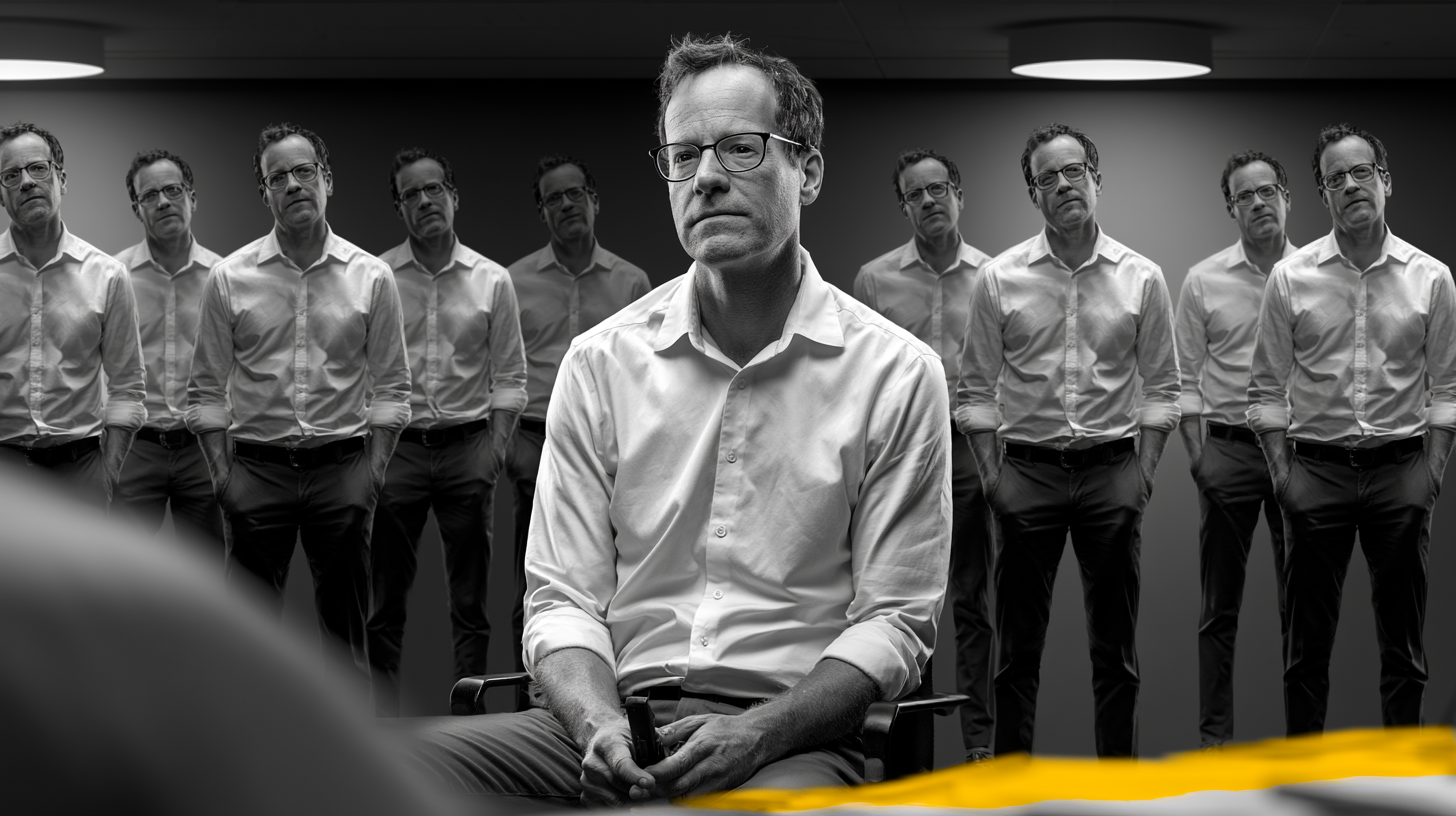
    I’ll keep saying it until I’m blue in the face: AI is the great leveller. Not because it makes everyone better, but because it pulls everyone towards the middle.

    That is a serious problem when it comes to fundraising. Investors do not fund the middle. They look for conviction, clarity, difference and judgement. When every pitch deck starts to look the same, read the same and make the same strategic claims, the founder begins to disappear from the story.

    What Are AI-Generated Pitch Decks?

    AI-generated pitch decks are investor presentations created or heavily assisted by artificial intelligence. AI can help founders structure slides, improve wording, create summaries and organise information.

    The problem starts when AI does more than support the process and begins to replace the founder’s thinking.

    A pitch deck should not simply communicate what a company does. It should show why this founder understands the problem, why the opportunity matters and why they are the right person to build the business.

    That is where generic AI-generated pitch decks can lose their value.

    The Signal Is Disappearing

    A pitch deck was never just a set of slides. It was evidence of how a founder thinks, how clearly they communicate and whether they can persuade customers, employees and investors to believe in something before it is obvious.

    AI has weakened this signal significantly.

    The language is cleaner. The structure is neater. The narrative often feels more professional. But that does not automatically make the pitch more persuasive.

    In many cases, it can do the opposite.

    When hundreds of founders have access to the same AI tools, similar prompts can produce similar language, structures and strategic claims. The result is a growing number of pitch decks that are technically polished but difficult to distinguish.

    Investors Are Already Adapting

    Founders often assume that using AI makes their pitch deck stronger because it sounds more polished. But investors are seeing that same polish everywhere.

    They therefore have to look beyond presentation quality and search for stronger signals.

    Jay Kapoor, General Partner at VSC Ventures, put it well:

    “If you can’t be bothered to differentiate your deck, how can you be trusted to differentiate your company?”

    Simon Blakey, Angel Investor and VC at Playfair, also said:

    “AI-generated decks look remarkably alike… the evidence I used to rely on to decide 1st meeting has stopped carrying any signal.”

    When everyone can produce the same level of acceptable output, acceptable output stops being impressive.

    Investors then have to look harder for what cannot easily be templated:

    • Genuine market insight

    • Founder judgement

    • Customer understanding

    • Original thinking

    • Evidence of traction

    • A clear and defensible point of view

    For more on the factors investors assess in a fundraising presentation, see our guide on what investors look for in a pitch.

    Can AI Create Investor Conviction?

    No. AI can help communicate conviction, but it cannot create genuine founder conviction.

    The biggest mistake founders make is believing that AI can communicate their vision better than they can.

    AI can improve wording, organise ideas, test the logic of an argument and identify gaps. But it cannot replace the experiences and decisions that give a founder’s story meaning.

    Jamal K, Partner at Stellar Ventures, said:

    “You cannot polish [AI] slop into conviction… investors spot the difference in the first three slides.”

    Conviction comes from the decisions you have made.

    It comes from knowing why you chose this problem, why it matters to you, what you have learned from customers and why you are willing to bet your career on solving it.

    AI cannot manufacture those experiences.

    What Should Founders Put in a Pitch Deck?

    Your pitch deck should reveal how you think rather than simply demonstrate how well you can use AI.

    A strong investor presentation should make clear:

    1. What problem are you solving?
      Explain the problem in specific terms and show evidence that it exists.

    2. Why does the problem matter now?
      Give investors a reason to believe the timing creates an opportunity.

    3. Why is your solution different?
      Explain what you do differently rather than relying on generic claims.

    4. What have you learned from customers?
      Real customer evidence is harder to replicate than polished AI language.

    5. Why are you the right founder?
      Your experience, insight and decisions should form part of the investment story.

    6. Why can this become a valuable business?
      Explain the market opportunity, business model and path to growth clearly.

    The more specific these answers are, the harder it becomes for your pitch to sound like everyone else’s.

    Your Job Is Not to Sound Impressive

    Too many founders optimise their pitch deck for professionalism.

    But your job is not simply to sound impressive.

    Your job is to make investors understand why you are the person to build this company.

    That means your deck should reveal how you think. It should contain judgement, trade-offs, evidence and a clear view of the market.

    A rough but specific pitch deck can be more persuasive than a polished but generic one.

    Investors can work with rough edges.

    They cannot work with a founder who has outsourced their point of view.

    If you need professional guidance on developing your presentation, our investor pitch deck consultant service can help founders develop a clearer and more investor-focused pitch.

    How Should Founders Use AI for Pitch Decks?

    The answer is not to stop using AI.

    AI can be extremely useful when it supports the founder rather than replacing them.

    Use AI to:

    • Improve clarity and grammar

    • Challenge your assumptions

    • Identify gaps in your argument

    • Simplify complicated explanations

    • Help structure information

    • Test whether your story is easy to understand

    • Suggest questions an investor might ask

    But keep the important thinking yours.

    Write the core story yourself. Provide the real customer evidence. Make the strategic decisions. Explain the market from your own experience.

    Then use AI as an editor, challenger and thinking tool.

    Use AI, But Do Not Hide Behind It

    I am not arguing against AI.

    Used well, AI can sharpen your thinking, test your logic and help you explain complex ideas more clearly.

    Here is my belief:

    Use AI to support your thinking, not replace it.

    Do not ask it to create its best impression of a passionate founder and then expect investors to feel that passion themselves.

    In a market where everyone has access to similar tools, originality becomes more valuable.

    The founders who stand out will be the ones whose thinking, judgement and passion still come through in the slides.

    Frequently Asked Questions About AI Pitch Decks

    Are AI-generated pitch decks a problem for fundraising?

    Not necessarily. The issue is not using AI itself. The problem is relying on generic AI-generated content that makes the founder’s thinking difficult to distinguish from everyone else’s.

    Should founders use AI to create a pitch deck?

    Founders can use AI to support pitch deck development. It can help with structure, clarity, editing and testing assumptions. However, the core investment story, evidence and strategic judgement should come from the founder.

    Do investors know when a pitch deck is AI-generated?

    Investors may not always know exactly how a deck was created. However, generic language, repetitive structures and unsupported claims can make a presentation less distinctive.

    What makes a pitch deck stand out?

    Specific customer evidence, clear market insight, strong founder judgement, a differentiated business model and a convincing explanation of why the opportunity matters can make a pitch more distinctive.

    Can AI create conviction in a pitch deck?

    AI can help communicate an existing point of view, but genuine conviction comes from the founder’s knowledge, experience, decisions and belief in the opportunity.

    The Founder Still Matters

    If nothing else, remember this:

    Nobody invests in a prompt. They invest in the person behind it.

    AI can make a pitch deck cleaner.

    It can make the writing sharper.

    It can make the structure more logical.

    But it should never make the founder disappear.

    When the technology becomes available to everyone, the advantage shifts back to what cannot be copied so easily: how you think, what you know, what you have learned and what you are prepared to bet on.

    That is what investors need to see.

  • Is Your Startup Ready to Raise Investment?

    Is Your Startup Ready to Raise Investment?

    How to Know If Your Startup Is Ready to Raise Investment

    James Church

    WRITTEN BY

    James Church

    Author, Investable Entrepreneur

    James is an award-winning business advisor and best-selling author. His clients have raised over £250m in early-stage funding. 

    Many founders believe they are ready to raise investment as soon as they have a great idea, a pitch deck, or a working product. Investors often see things differently.

    Every year, thousands of startups seek funding, but only a small percentage successfully secure investment. The reason is not always the quality of the idea. More often, it comes down to preparation.

    Being investor-ready means demonstrating that your business has the foundations, strategy, and growth potential investors are looking for.

    This is why many founders work through an investor readiness program before launching a fundraising campaign.

    What Does Investor-Ready Actually Mean?

    Investor readiness is the point at which a startup can confidently present itself as a credible investment opportunity. It goes beyond having a business idea or product.

    Investors want evidence that the founder understands the market, has a realistic growth strategy, and can effectively use investment capital to create value.

    An investor-ready business can clearly communicate:

    • The problem it solves
    • Its target market
    • Revenue model
    • Growth strategy
    • Funding requirements
    • Expected return potential


    Without these elements, attracting investment becomes significantly more difficult.

    Why Many Startups Seek Funding Too Early

    One of the most common fundraising mistakes is approaching investors before the business is fully prepared. Founders often focus on the need for capital rather than the readiness of the opportunity.

    This can lead to:

    • Rejected pitches
    • Loss of investor confidence
    • Poor valuation outcomes
    • Missed fundraising opportunities


    Unfortunately, investors rarely give second chances to opportunities that appear unprepared.
    Building investor readiness before fundraising helps avoid these challenges.

    Signs Your Startup May Be Ready for Investment

    While every business is different, investors typically look for several key indicators.

    You Have Validated a Real Problem

    Investors want proof that customers genuinely need your solution. Market validation may come through:

    • Customer interviews
    • Pilot projects
    • Early sales
    • User growth
    • Industry feedback


    Validation reduces risk and strengthens your investment case.

    You Understand Your Market

    A strong founder understands the competitive landscape and can clearly explain why their business is positioned to succeed. Investors often ask:

    • How large is the market?
    • Who are the competitors?
    • What makes this solution different?


    Being able to answer these questions confidently demonstrates market awareness.

    You Have a Clear Growth Plan

    Investors are funding future growth, not current operations. Your business should have a realistic plan for:

    • Customer acquisition
    • Revenue growth
    • Team expansion
    • Product development
    • Market penetration


    The clearer the roadmap, the easier it becomes for investors to understand the opportunity.

    You Know How Much Funding You Need

    Many founders struggle to justify their funding requirements. Investors expect founders to explain:

    • How much capital is needed
    • How the funds will be used
    • What milestones will be achieved
    • How the investment supports growth


    A well-defined funding strategy signals professionalism and preparation.

    How an Investor Readiness Program Helps

    An investor readiness program is designed to prepare founders before they begin fundraising.

    Rather than immediately seeking investors, founders focus on strengthening the key areas investors evaluate during due diligence. Typical areas include:

    Investment Proposition Development

    Ensuring the business presents a compelling and credible investment opportunity.

    Fundraising Strategy

    Creating a structured approach to identifying and approaching suitable investors.

    Financial Planning

    Developing realistic forecasts, growth assumptions, and funding requirements.

    Pitch Deck Preparation

    Building investor-focused materials that communicate the opportunity clearly.

    Founder Readiness

    Helping founders confidently answer investor questions and navigate fundraising conversations.

    The result is a stronger, more investable business.

    The Role of a Startup Fundraising Consultant

    Many founders benefit from working with a startup fundraising consultant during the preparation phase. A consultant helps identify weaknesses before investors do.

    Their role often includes:

    • Reviewing fundraising strategy
    • Improving investor materials
    • Strengthening financial planning
    • Refining investor messaging
    • Supporting fundraising execution


    Rather than simply introducing investors, experienced consultants help founders become genuinely investment-ready.

    How Startup Advisory Services Support Long-Term Growth

    Investment readiness is not only about securing funding. It is also about building a sustainable business.

    This is where startup advisory services can provide significant value. Advisors often help founders with:

    • Strategic planning
    • Business modelling
    • Financial decision-making
    • Scaling operations
    • Growth strategy


    These services support both fundraising success and long-term business performance.

    Questions to Ask Before Raising Investment

    Before approaching investors, founders should ask themselves:

    • Can I clearly explain the opportunity?
    • Do I understand my market and competitors?
    • Have I validated customer demand?
    • Do I know how much funding I need?
    • Can I demonstrate a realistic growth strategy?
    • Are my financial projections credible?


    If the answer to any of these questions is unclear, additional preparation may be needed.

    Preparing for Fundraising Success

    Raising investment is not simply about finding investors. It is about presenting a business that investors want to back.

    Founders who invest time in preparation consistently achieve better fundraising outcomes than those who rush into investor conversations.

    Whether through an investor readiness program, support from a startup fundraising consultant, or broader startup advisory services, becoming investment-ready can significantly improve your chances of attracting the right investors and securing funding.

    FAQ: Investor Readiness Program

    1. What is an investor readiness program?

    An investor readiness program helps founders prepare for fundraising by improving strategy, financial planning, pitch materials, and overall investment readiness.

    2. How do I know if my startup is ready for investment?

    Your startup may be ready if you have market validation, a clear growth strategy, realistic financial projections, and a well-defined funding plan.

    3. What does a startup fundraising consultant do?

    A startup fundraising consultant helps founders prepare for investment by strengthening fundraising strategy, investor materials, and overall readiness.

    4. Are startup advisory services useful before fundraising?

    Yes. Startup advisory services can help founders improve strategic planning, financial management, and business growth before approaching investors.

    5. Why do investors care about readiness?

    Investor readiness reduces risk. It demonstrates that a founder understands the market, has a credible growth plan, and can effectively use investment capital.

    About the Author

    James Church is an award-winning startup fundraising consultant and the Amazon best-selling author of Investable Entrepreneur. His clients have raised more than £250 million in startup funding. Through consulting, mentoring, and investor-readiness programmes, he helps founders prepare for investment and build investable businesses.